 Mami
Mami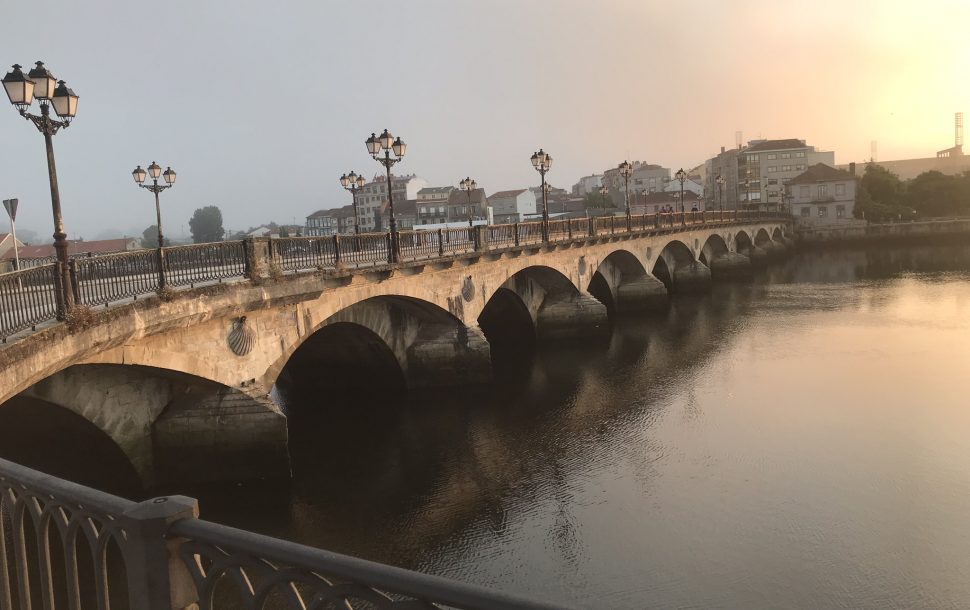
From Tui until Santiago there are 119 km, and it’s called Portuguesse St. Jame’s way.
To receive “The Compostela” you need to walk 100 km, if you don’t have much time, in five or six days you can arrive to Santiago, depending on the rhythm you choose.
Tui is a town on the border between Portugal and Spain, in fact the border is natural, as the river Miño separates Valença do Miño (Portugal) with Tui (Spain).
To arrive in Tui you can fly directly to Santiago the Compostela or Oporto in Portugal, the distance from each airport is virtually the same you can catch a bus and it’s about 1 hour from each airport.
When you arrive to Tui, you can go to the Cathedral to pick “the credentials” up, it cost 2€ per person.
“The credential” is like a passport that you show in churches, restaurants o hostels that you visit in your way to Santiago.
When you arrive to Santiago, you must show it in the Pilgrim Office and they give you “The Compostela” (a document that certificated that you do the St. Jame’s way. If you want to know more, consult here.
And with your credential (passport), the backpack and good attitude we start or first day, in this post we’ll tell you only about our experiences.
First leg: TUI-O PORRIÑO (18.7 Km)
The way from Tui starts with a small green footpath, next to a stream, with lots of shade and abundant vegetation… several times you must cross the road, but you can join the footpath quickly in the other side, there aren’t any steep parts, the only thing to be careful of is the -sign in “Bar Laguna” which shows two options: alternative route or original route, like you can see in the photo.
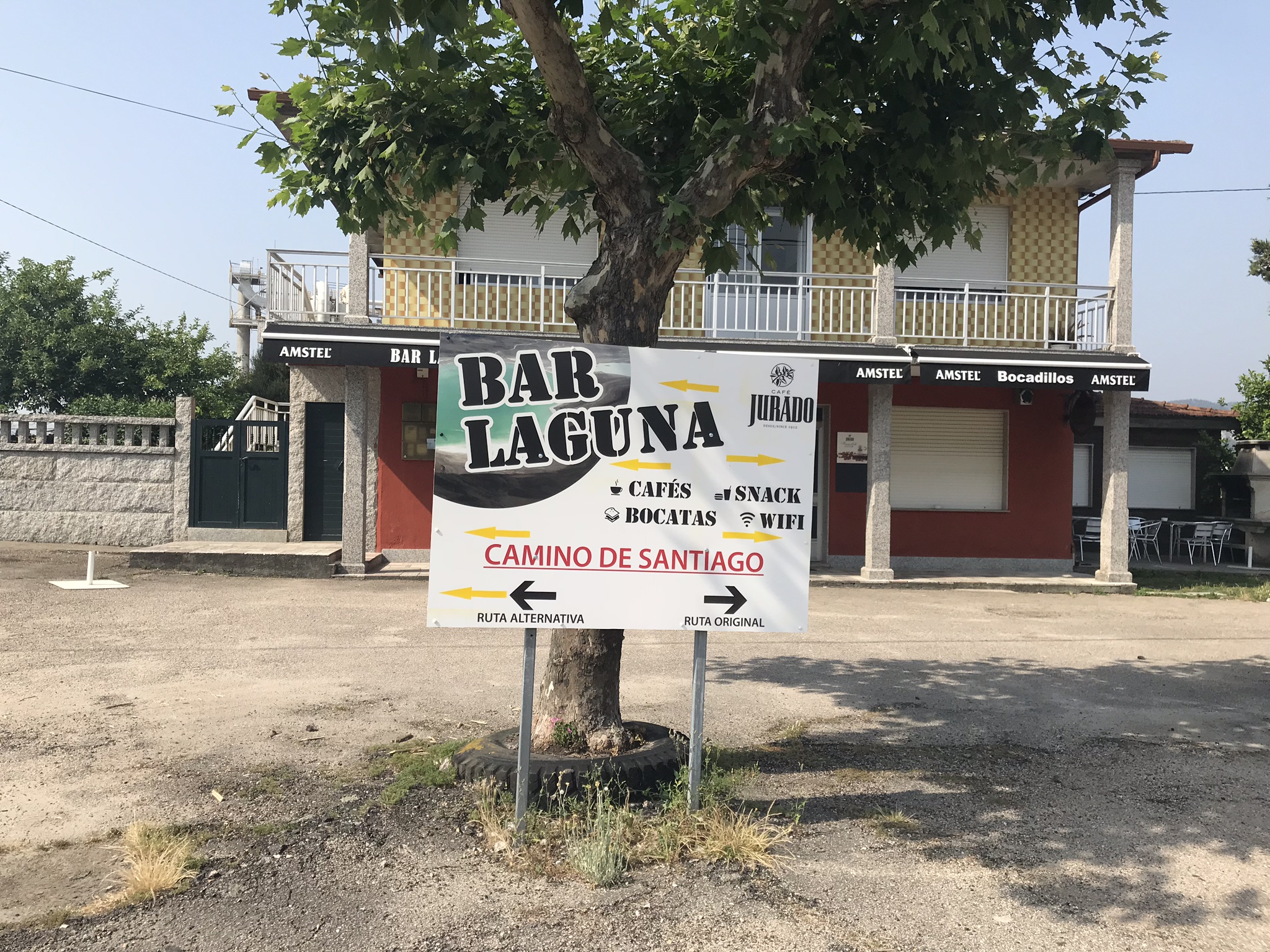
We counted the steps using our mobile and the alternative route has 2 km more than original route…
However, it’s better to take the alternative route because the original passes through an industrial estate and therefore it’s boring and very hot.
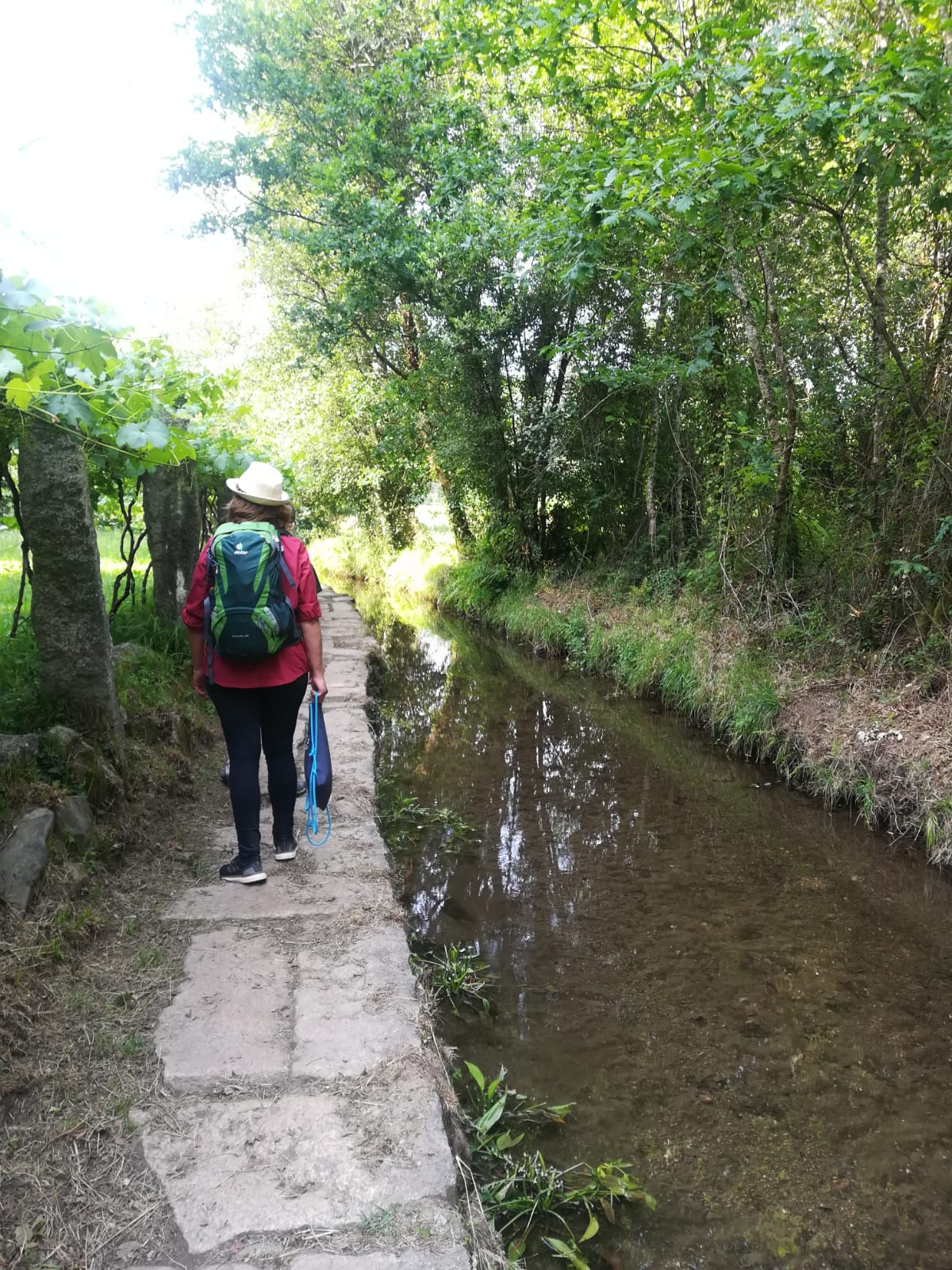
The alternative route is far more beautiful and you can follow the stream in comfortable shade right to the hostel door.
We put a photo here for you to see.
In general, the hostels of the city and country councils are very good.
In Porriño the hostel is new and close to the river, there are 50 bunk beds, separated bathrooms with showers and a big kitchen (without any utensils to cook) but with fridge, tables, etc.
Also, you have a drinks vending machine with good coffee that you can take before you leave.
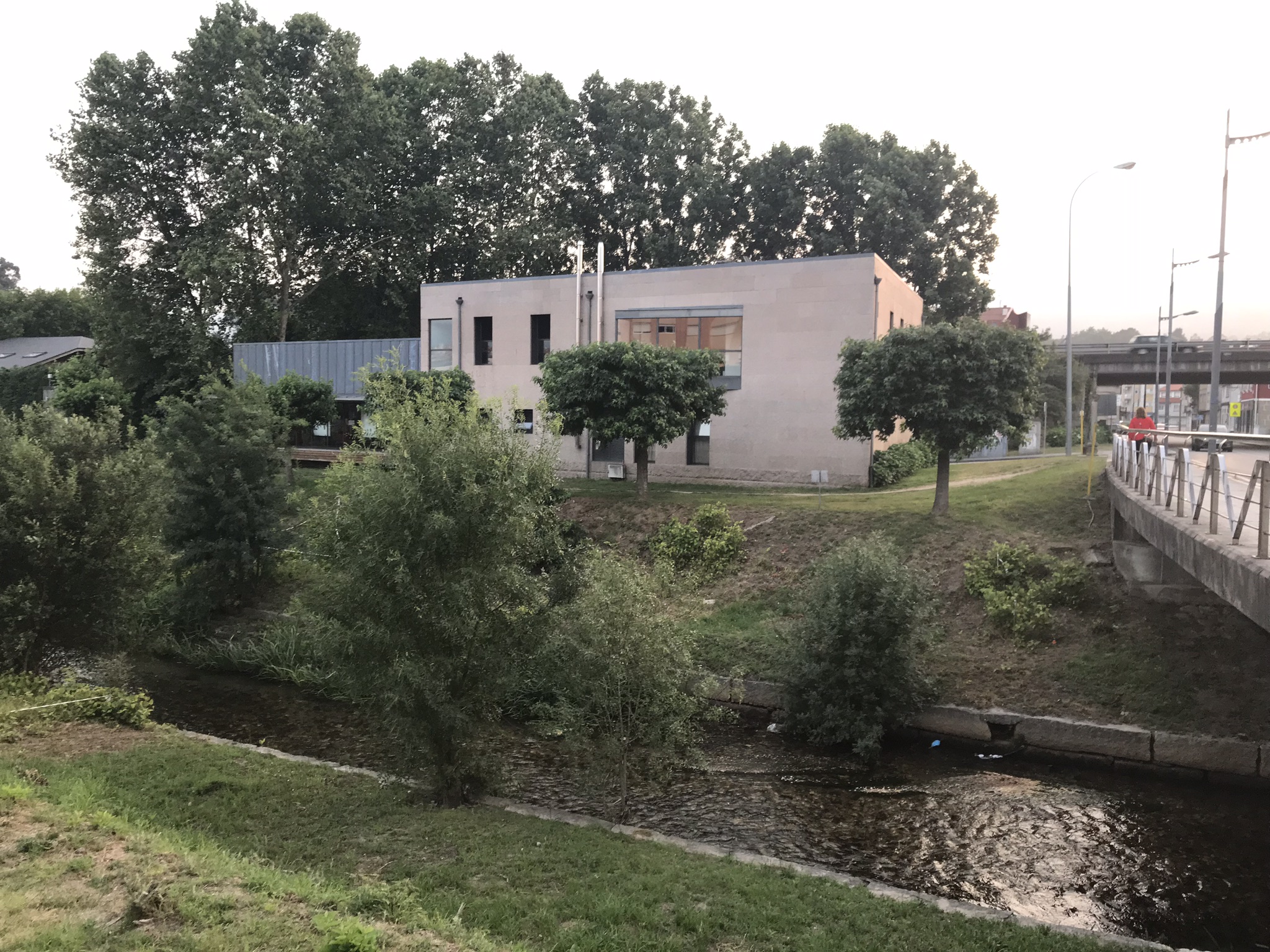
Very close to the hostel is the bar “Paso a Nivel” where they sell hugs rolls (one between two is perfect) and it’s a good place for breakfast because the coffee and croissants are very tasty.
Another alternative is to buy the day before in a supermarket (Eroski is close by) and you can buy a coffee from the vending machine in the hostel before you start the walk.
Second leg: O PORRIÑO – REDONDELA (15.2 Km)
This leg starts in a large fashion until the “Mos Pazo”, where there are to beautiful places to have breakfast, we walked a Little further to the souvenir shop, the land lady of the bar was friendly and the sandwiches and coffee were extremely tasty. If you have your own sandwich, there’s a good place in front of Santa Eulalia church with a fountain and shade.
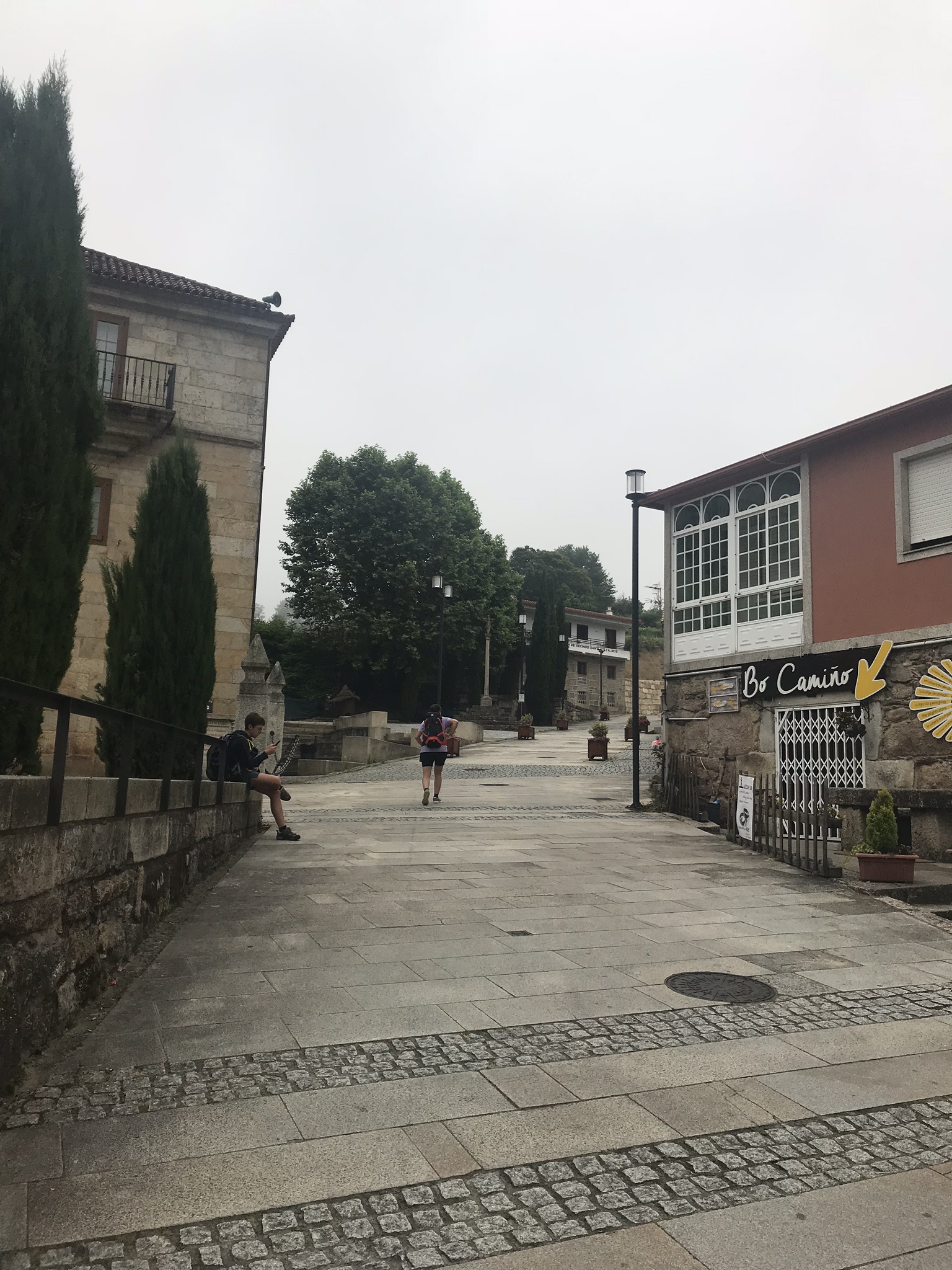
After breakfast, we walked up a short steep climb without any difficulty (with our breakfast fuel), later we joined the trick and return to a little more steep climbing only to finish with a steep descend, what goes up, must come down.
When you are coming down, you can see the “Ria de Vigo” and the town “Redondela”.
The entrance to Redondela is short and fast and you must cross the viaduct to arrive to the hostel situated in a historical building from the S. XVI century.
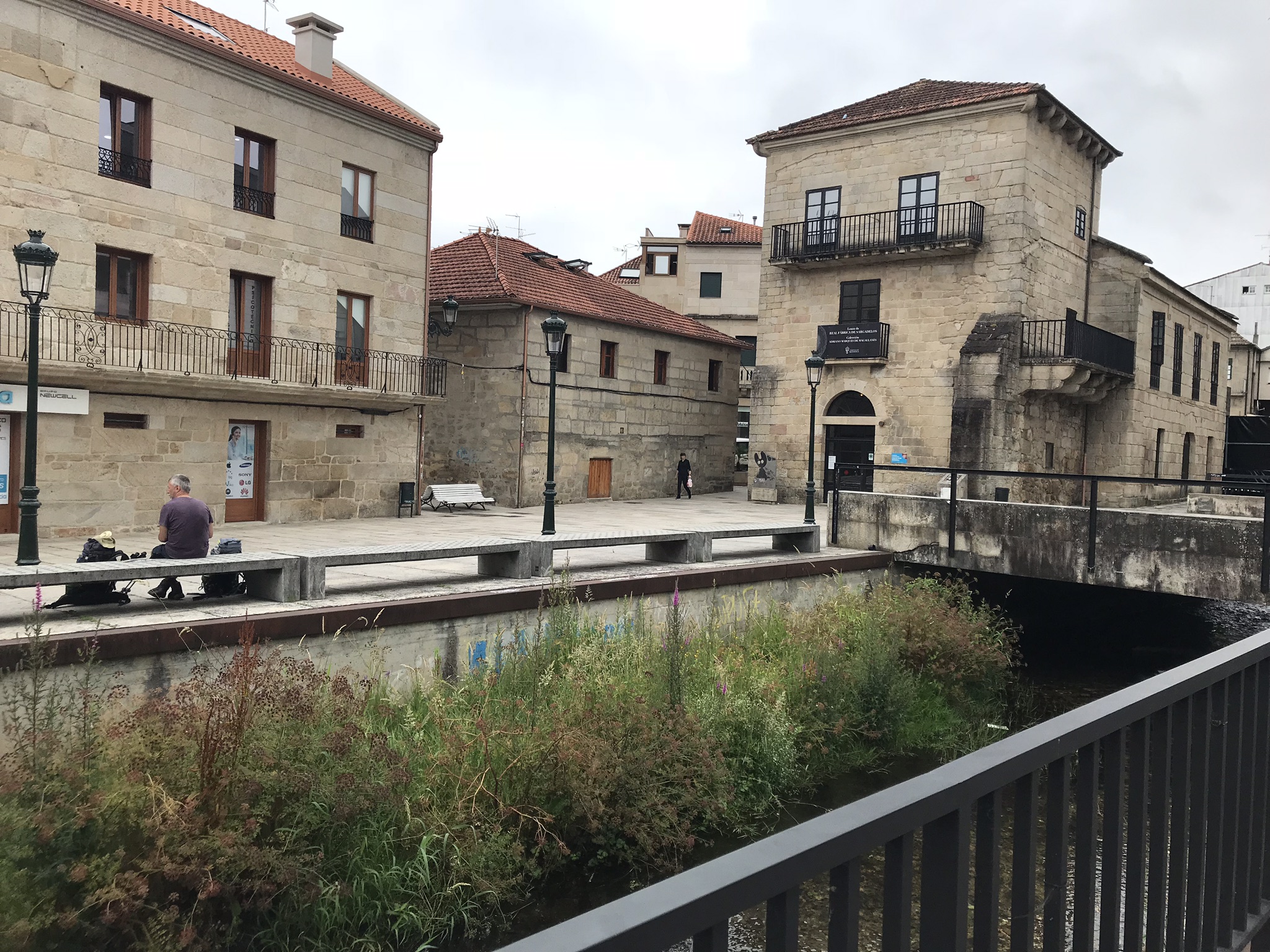
The hostel has 42 places, a small kitchen with fridge, a big pen lunch with books and bathrooms and showers, which are all together and quite small serving each of the two dorms.
But the good news is the hostel has washer dryer for 6€, you can wash and dry your clothes, during which you can visit the beach which is 2 km from the hostel.
There are two options, put on your boots and walk or, live us, take a taxi (the taxi rank is 50 meters from the hostel following the river on the left), we paid 14€ there and back.
At the beach, we had lunch with fresh fish (jurel) and if the weather has been good, maybe we would have swam, but this was Galicia and our blood is Valencian.
Near the hostel, there are several supermarkets and in the hostel, are vending machine, if you want you can buy food and prepare dinner and breakfast for the following day.
The third leg: REDONDELA-PONTEVEDRA (18.2 Km)
This one of our favorites legs, it’s very green and although we had to climb after going to the Sampaio bridge when we reached the top it was all worth it.
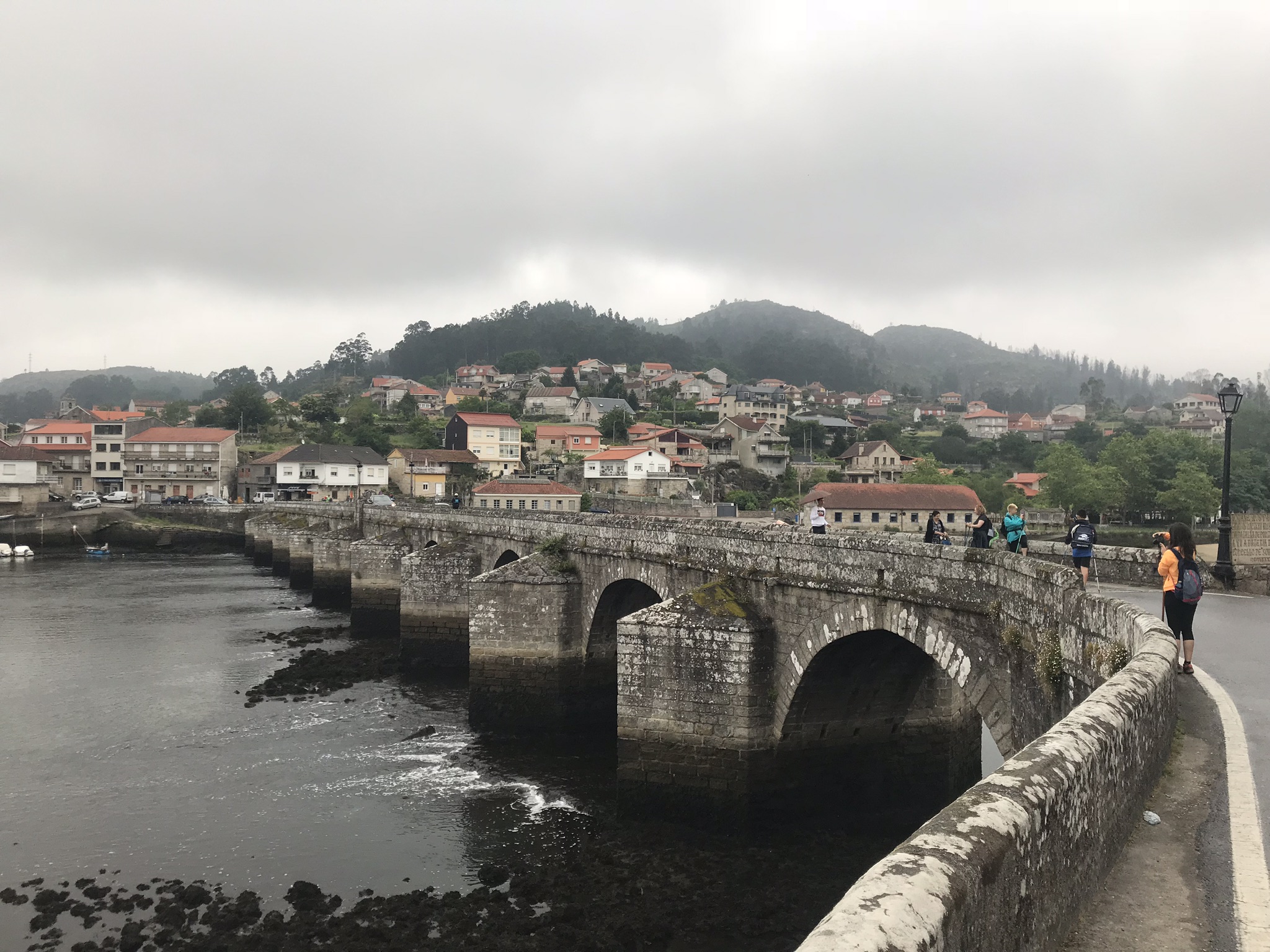
One word of advice: there is a Roman road with big stones and it’s difficult or impossible to cross riding a bike with a wheel chair or with a pram, however on foot it’s possible.
And if you persevere it’s worth the effort.
Before going up we found Susi who is an example of the pilgrim spirit, she had a parasol, a picnic table and a basket of fruit and with a permanent big smile using words of encouragement for all the pilgrims.
She has a note that she offers to call the people with a short cut to arrive to the Pontevedra’s hostel walking near the river.
“Tomeza” without crossing the road, in an “unofficial” way.
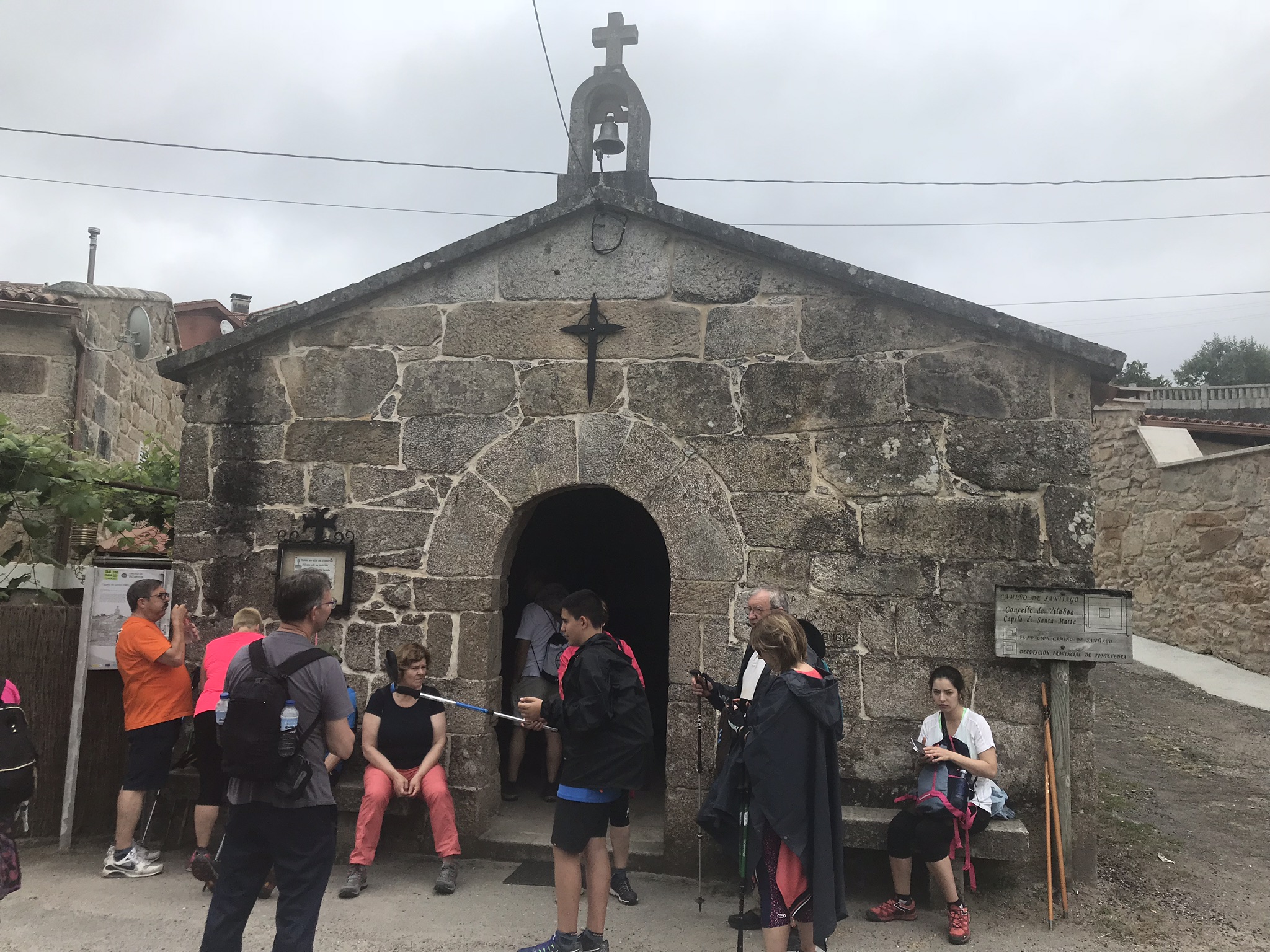
Be carefully when passing, the small church in the photo, because we missed the unofficial route and we had to take the road and we had to take the road normally this is ok, however if it’s exceptionally hoy it is uncomfortable and there is the sound of traffic.
Once we arrived to Pontevedra’s signpost, we had a short walk to the official hostel. You will see the train tracks and on the right, is the hostel.
It’s an enormous modern very well equipped with 56 beds in two dorms with bathrooms and a large shower area, a large kitchen and gardens all around.
There is also a laundry service, which for 6€ will wash and dry your clothes.
This was a fantastic option for us because we have more time to visit the best stop, for us, in the Portuguese way.
Pontevedra is a historical and happy city, full of squares and terraces with a sunny outlook.
In Pontevedra it is (small dish) caña (beer) and a chat in everyday life.
When you finished eating, drinking and chatting, it is a one and half kilometres walk from the historical centre to the hostel.
We haven’t included any photo of the hostel, but you can click on the link to final out more: Hostel Pontevendra.
Fourth leg: PONTEVEDRA-CALDAS DE REIS (23 Km)
At the start of this leg you need to pass through the historical centre with its squares, churches, etc.
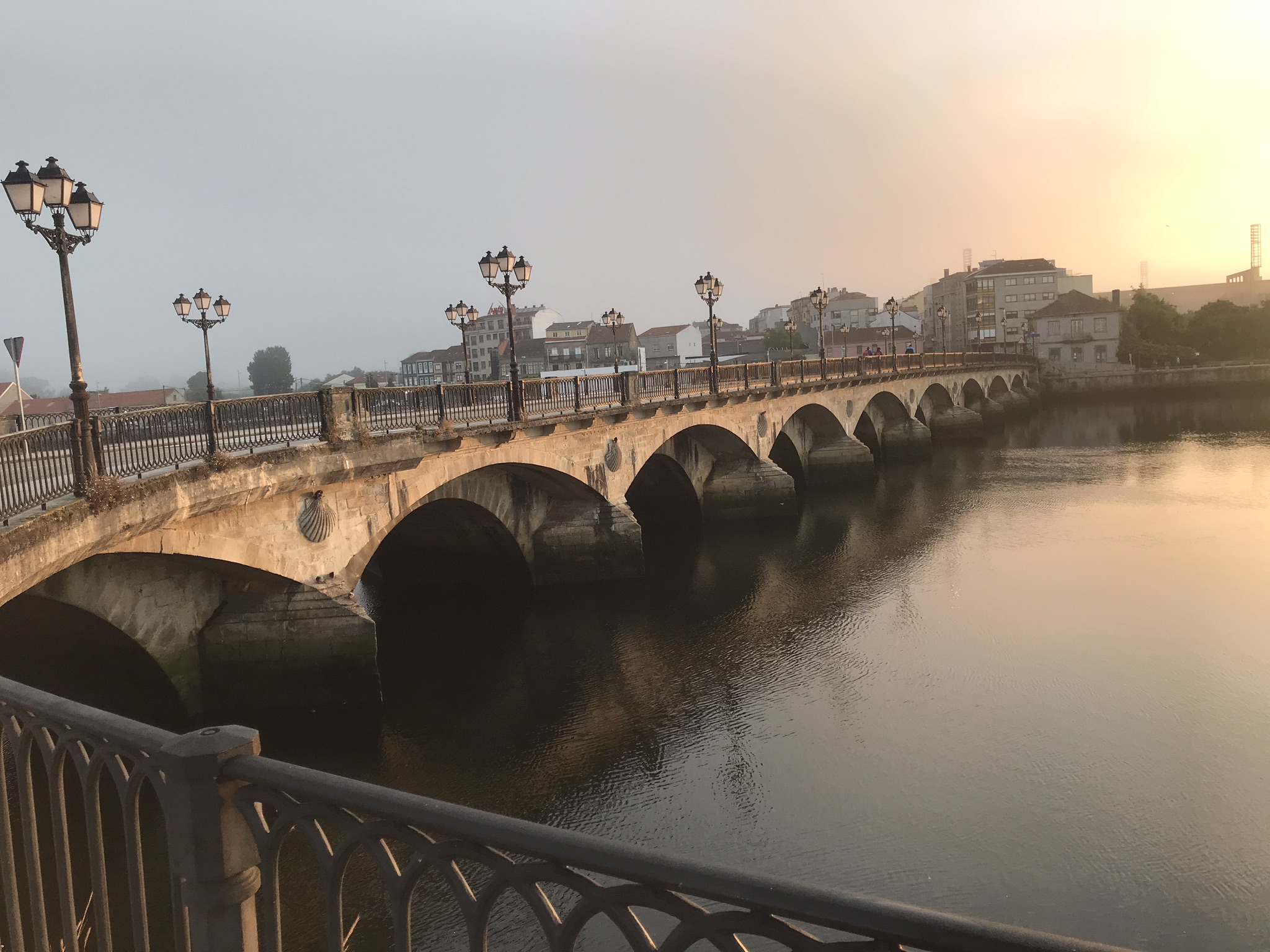
It’s very pleasurable to walk through the beautiful city at this time and eventually arrive at the Lérez River from the photo you can see how beautiful the bridge and the city is at first light.
The morning started incredibly good walking among the vegetation and shade with some steep part, but only a few… but be careful because you must cross several roads and train tracks without barriers.
But when you cross the train tracks, there is the perfect place to have breakfast Spanish style in San Amaro. Where there is a covereel vine terrace offering shade and a wonderful kind lady serving gigantic rolls full of love like you can see in the photo.

After breakfast, it’s very difficult to walk, more of a waddle, we continued the path anyway.
Be careful when you leave as you must eventually cross the main road when you see the signs that show the area of “Barroso River” our advice is to follow the signs and in 500 meters you will arrive (this is a slight detour from the path).
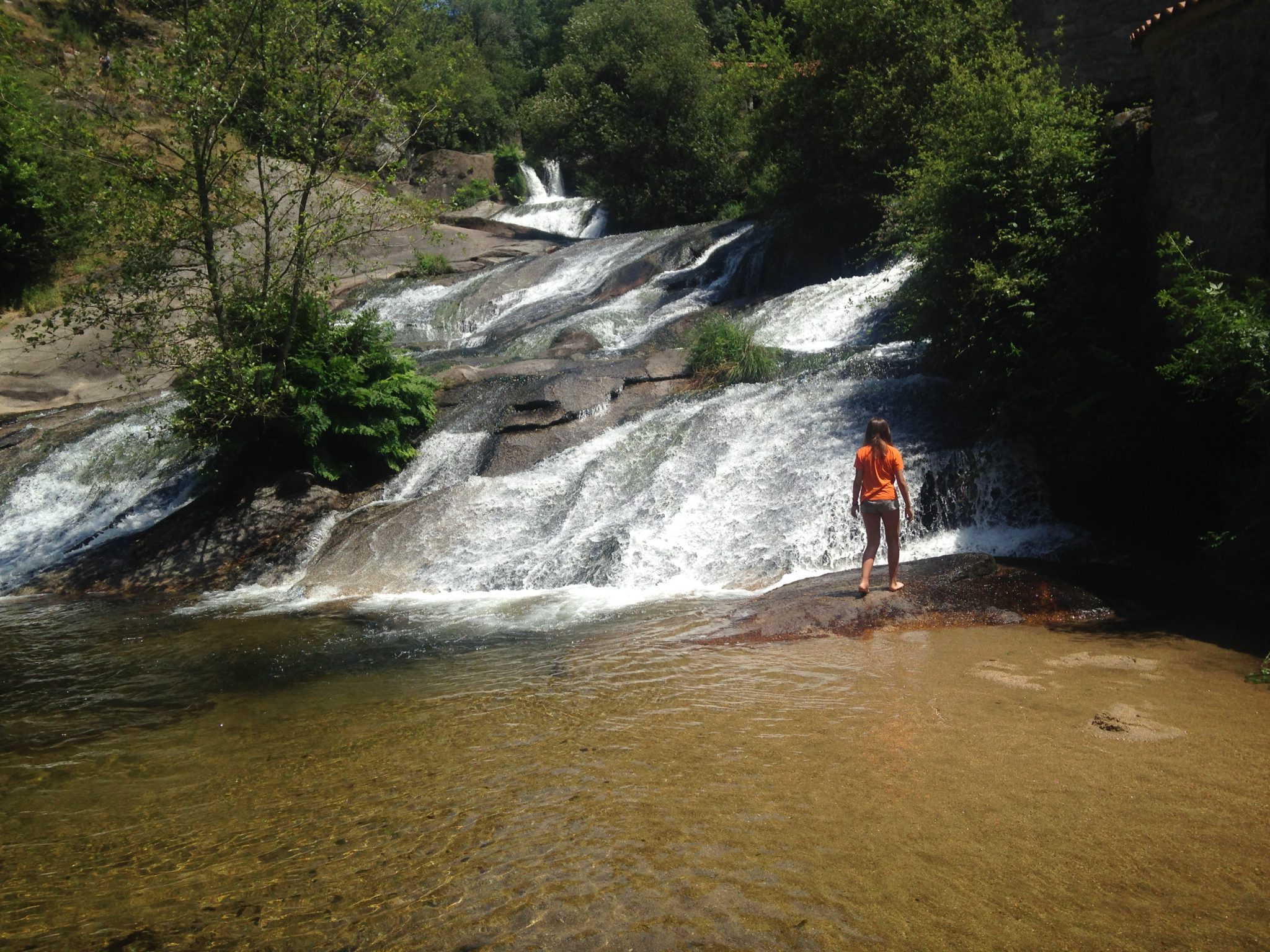
It’s a beautiful place and you can swim o paddle in fresh and pure water.
Once arrived in Caldas, the people told us the official hostel wasn’t up to standard you can see from the photo the hostel on the left and from you own opinion.
We stayed for the first time in a private hostel close by that cost 8€ per night compared to 6€ in the official hostel, this cost isn’t a great difference, however the official hostels tend to enforce the rules, particulary at night time, so if you are looking for good night sleep, the official hostel is the best option.
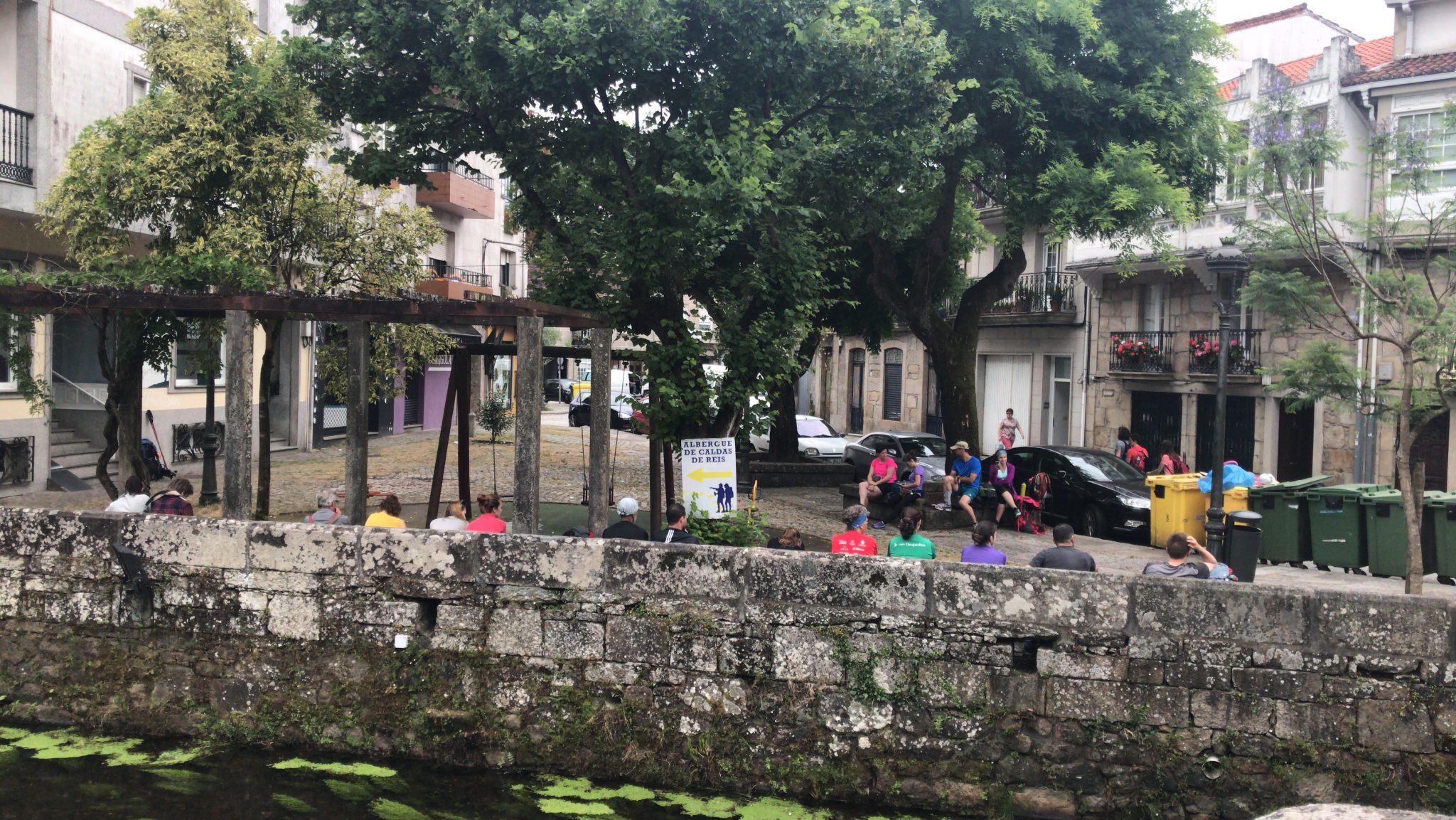
Caldas de Reis Hostel.In Caldas we spend a good afternoon in the free thermal spa, I don’t’ know if you know, but the water comes out at 50 º C and the past was used for washing clothes, now however the pilgrims use the natural spa for clipping in their feet after walking.
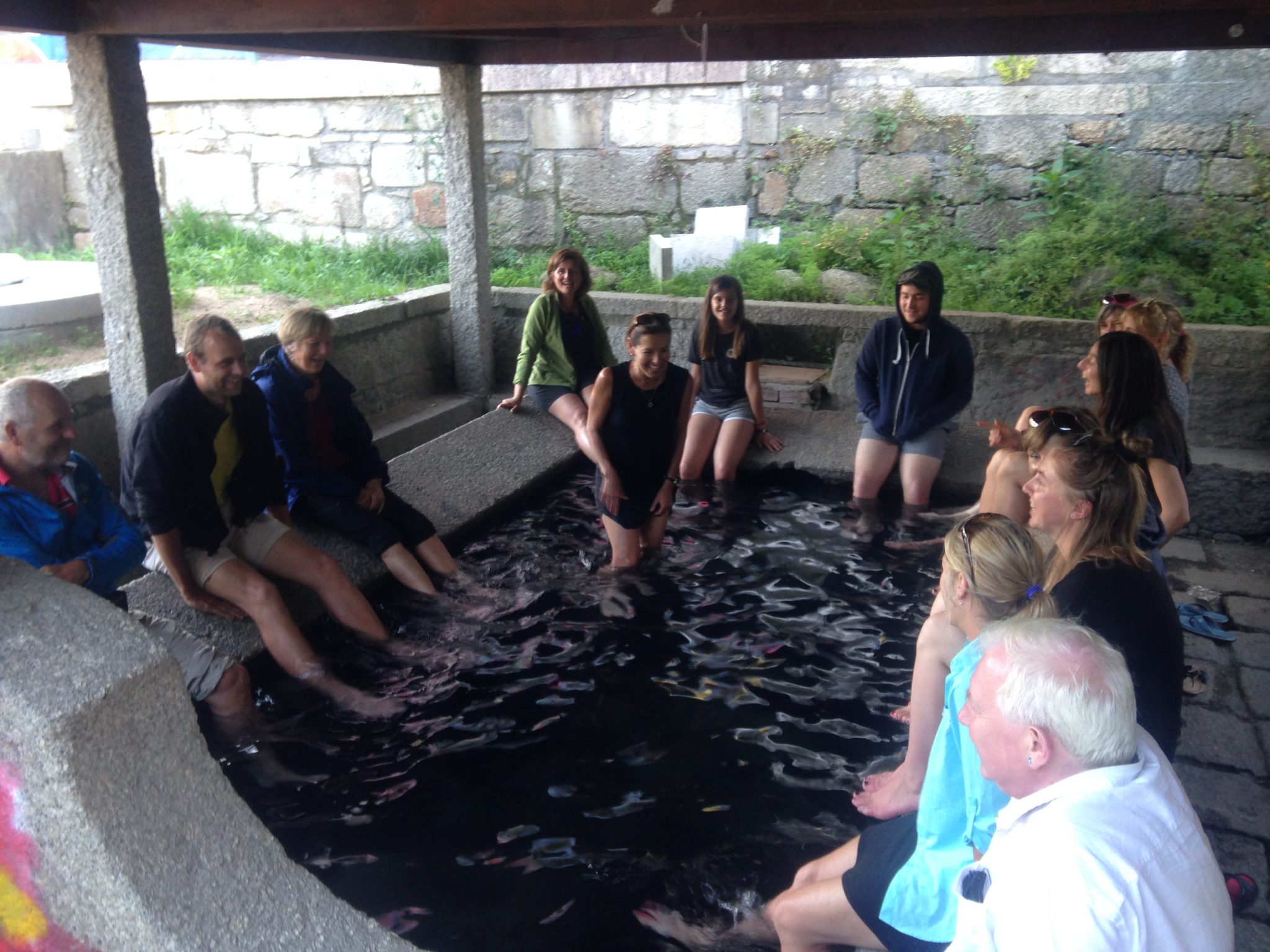
We, of course, clipped our feet! But also we took the liberty of booking a session of massage in Daña Spa… ¡Uauh!
The fifth leg: CALDAS DE REIS-PADRÓN (18.5Km)
The fifth leg of the Portuguese way is easy; you can walk through green areas and there are no steep parts.
When you arrive to Pontecesures, before you cross the Ulla River you can take a slight detour of 3 km and visit the Franciscan Monastery of Herbón, the idea of sleeping in the Monastery is an interesting one, we didn’t do it unfortunately, but we will the next time.
We decided to spend the afternoon in Padrón and taste the famous peppers (be careful the pepper are deceiving some are very spicy whilst other are sweet).
The place we choose to taste the peppers was called “Ruta Xacobea” and which is on the promenade next to the river, 100 metres from the hostel.
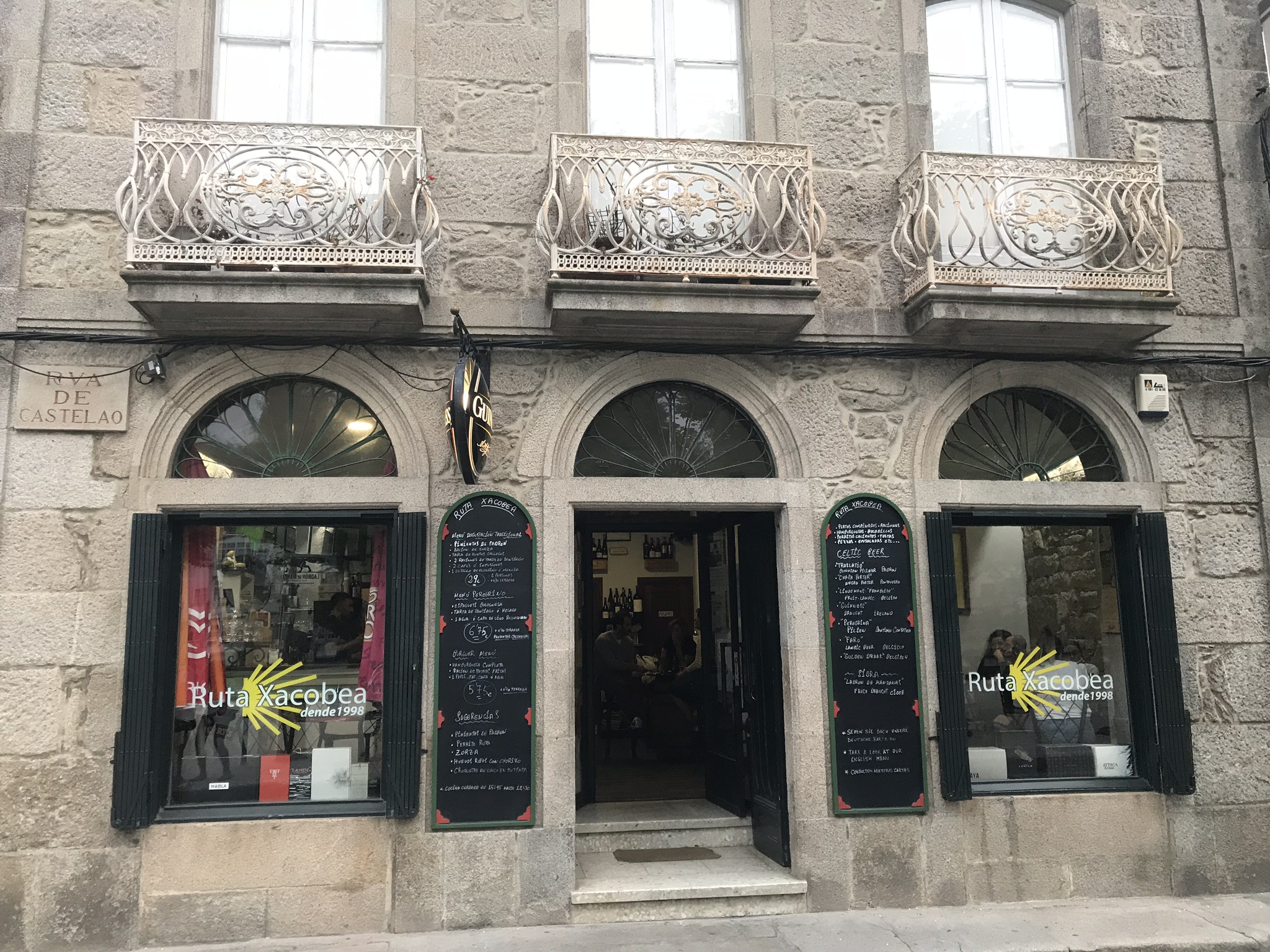
One of the highlights of the Portuguese way are the hostels. In Padrón you will find an old stone house joined to the Carmen Convent the views and the situation are a luxury for the senses.
The are 46 beds in two dorms, one on the first floor and the other on the second.
The Kitchen is spacious and has a terrace where you can wash and hang out your clothes or just to have a chat. They don’t have a coffee vending machine. However, in Padrón the bars open at 6:00 am.
One typical place is “Casa Manolo” and the owner is endearing and gives hugs to all of the pilgrims, his bar is full of moment that pilgrims have lefts such as photos, walking steaks or notes.
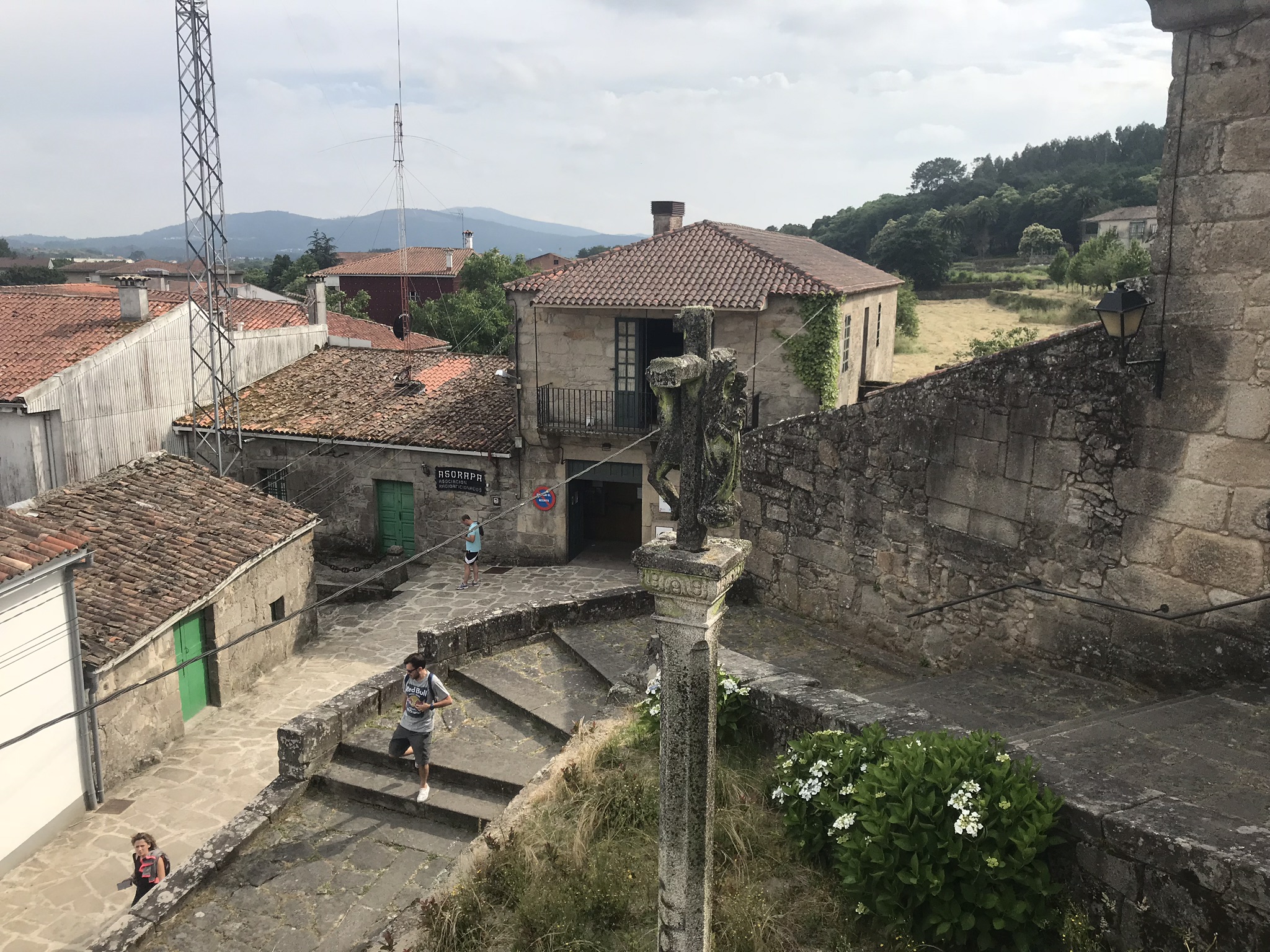 Hostel to pilgrims in Padrón.
Sixth leg: PADRÓN-TEO (10.1 Km)
The major part of pilgrims walk without difficulties 25 km from Padrón to Santiago, but we decided stop and give us a price. An easy walk and the day after only 15 km and we can arrive early to Santiago, in this form we couldn’t to do the queues that there are to pick the Compostela up.
When we left Padrón we found two things: Iria Flavia a beautiful and ancient church when the legend say that St. James preach for first time in Spain and the cemetery where are the Spanish Nobel’s price Camilo José Cela.
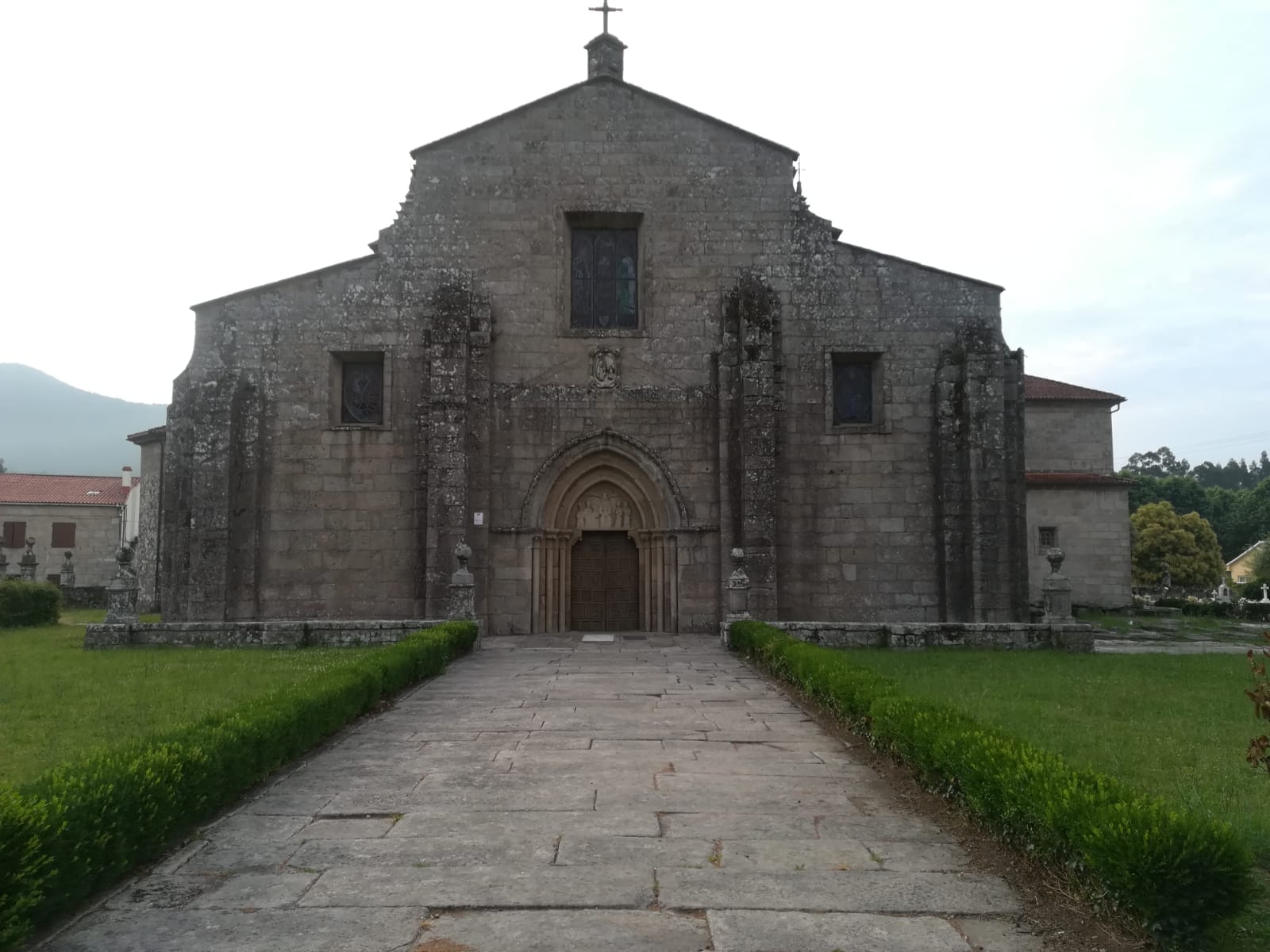
In 10 km we arrived to Teo, the way continuous to left but if you go straight on, you will arrive to the Xunta’s Hostel.
Is a small hostel in the middle of nonsense with beautiful places with river perfect to spend the afternoon, in few meters there are a bar-shop where you can buy for prepare lunch or dinner. A good afternoon to meditation, play cards, read a book o have a good chat.
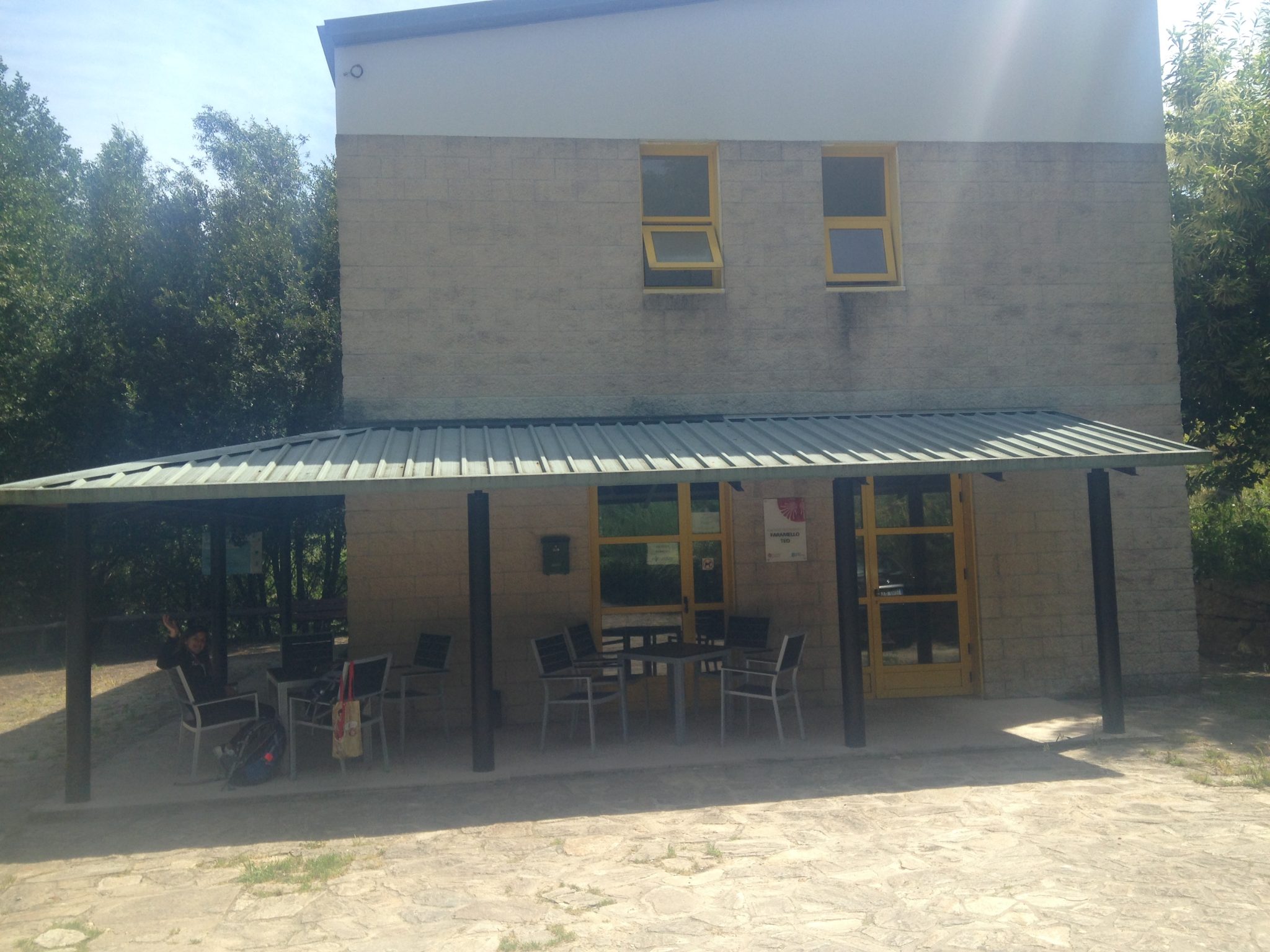
The hostel has 26 beds in two dorms, big kitchen and the best part, a big garden with tables, chairs and bigs trees and silent.
Sevently leg: TEO-SANTIAGO DE COMPOSTELA (15 Km)
The beginning on the last leg is beautiful, forest, silent… and some improvised coffee stand a perfect place where do a stop.
After this you’ll cross some towns and the entrance to the city is long and heavy, but there are few kilometers to arrive…
Near the Cathedral the way goes near Alameda Park, our advice is cross through the park because there are the “Tres Marías” a sculpture funny to take a photo.
When you leave the park and cross a zebra crossing, you’ll be in “Rua do Franco”, a street full of bares that way be you’ll visit on night.
And in this way, with a smile on our lips we arrived to the Obradoiro Square, is moment for photos and a little rest in front of the cathedral enjoying the moment.
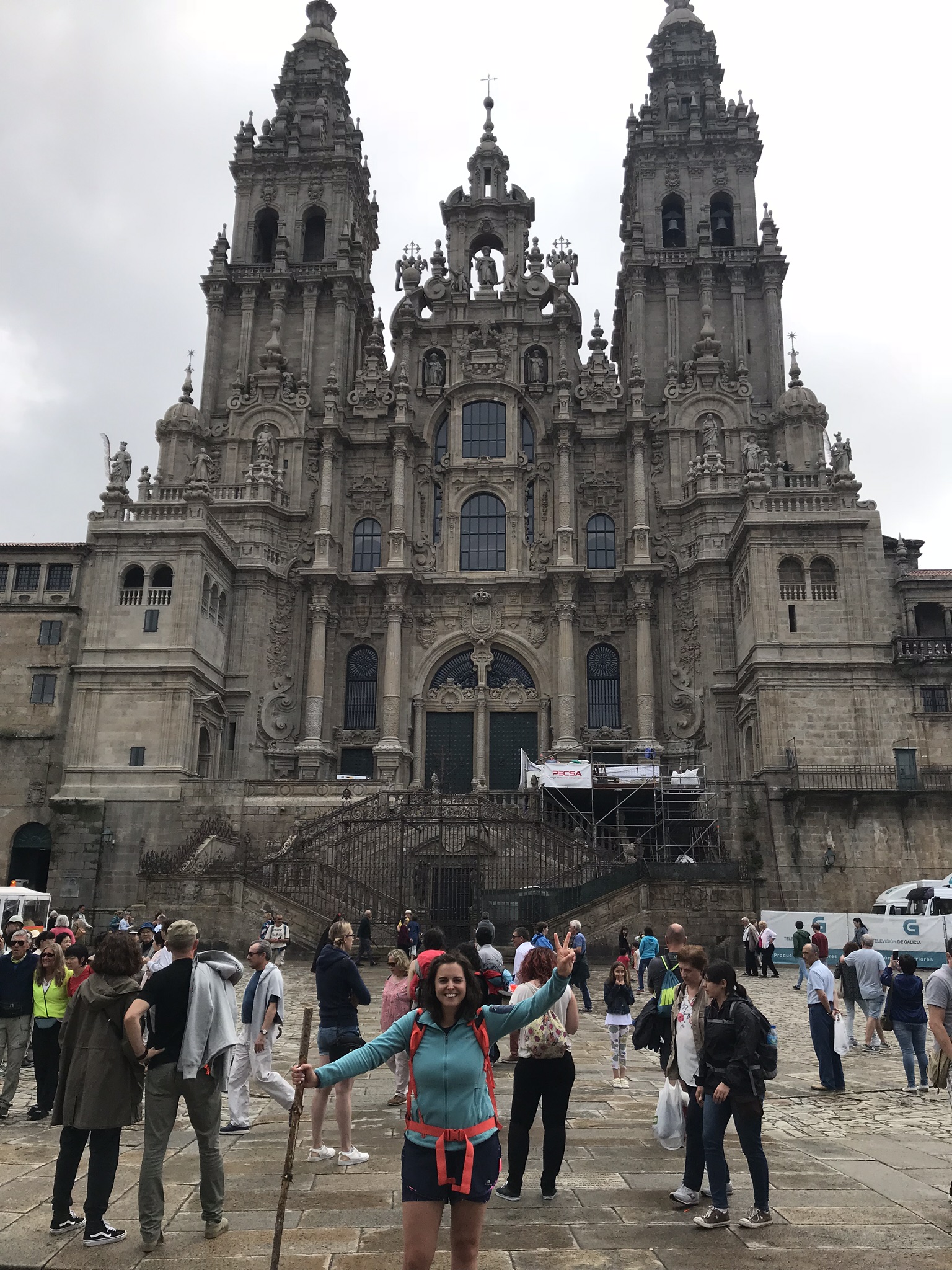
We’ve got the objective. Now we can go to the “Pilgrim Office” to pick the Compostela up and after go to the pilgrim’s mass in the cathedral, with luck you could see “the Botafumeiro”, a lot of people ask what you need to do for seeing it.
“The Botafumeiro” fly 25 times per year coinciding with the liturgical acts… the rest of the time you can request, paying about 300€, in the Pilgrim Office.
Sometimes associations or group request them, but it’s luck can see it.
The Xunta’s hostel in Santiago is “S. Lázaro”, but it’s 3,5 km from the center, for this reason we decided look for one in the old town, and we recommended you for the ubication and it’s possible to book in advance: Azabache Hostel.
And the last advice for dinner there a special place in Santiago is the Black Cat, a traditional tavern in Santiago. A very authentic place.